recent posts
Tags cloud

Why Strategic Diversification Is More Critical Than Ever for UK and Global Investors
 Why Strategic Diversification Is More Critical Than Ever for UK and Global Investors
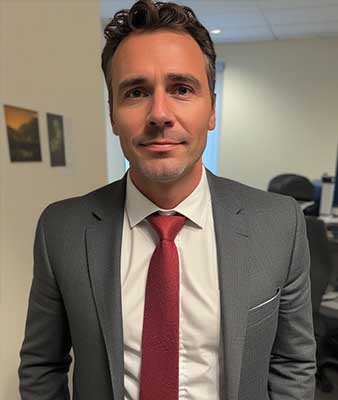
By Jordan Jones, Senior Financial Advisor, Welford Capital
As we reflect on the close of March 2026, global markets have delivered a reminder that volatility remains the only constant. The FTSE 100 posted a modest 1.8% gain for the month, buoyed by resilient UK corporate earnings, while the S&P 500 climbed nearly 3% on the back of continued AI-driven momentum in US tech. Yet beneath the surface, cracks are visible: bond yields have steadied after aggressive central-bank rate cuts, geopolitical flashpoints in the South China Sea have pushed oil briefly above $85 a barrel, and sterling has strengthened modestly against the euro amid signs of a soft landing for the UK economy.
At Welford Capital London, my team and I have spent the past four weeks stress-testing client portfolios against precisely these conditions. In more than 18 years advising high-net-worth individuals, family offices and institutional clients from our offices in the City, I have rarely seen a month where the interplay between monetary policy, geopolitics and sector rotation has been quite so pronounced. This is not the time for reactive tinkering. It is the moment to lean on disciplined, forward-looking strategies—the very approach that defines everything we do at Welford Capital.
The March 2026 Macro Landscape: Rate Cuts, Geopolitics and the AI Tailwind
March 2026 will be remembered as the month the Bank of England delivered its third 25-basis-point cut of the cycle, taking the base rate to 4%. Inflation has now settled just above the 2% target at 2.3%, but core services inflation lingers stubbornly. Across the Atlantic, the Federal Reserve’s March meeting signalled two further cuts by year-end, while the ECB has already eased to 2.75%. The result? A flatter yield curve and renewed appetite for duration in fixed income.
Yet the backdrop is far from benign. Tensions between the US and China over semiconductor export controls have rattled supply chains, and renewed skirmishes in the Taiwan Strait have reminded investors how quickly energy and technology costs can spike. Closer to home, the UK’s fiscal rules remain tight post the Autumn Statement, but business investment is picking up thanks to the new capital allowances regime.
Investment themes dominating client conversations at Welford Capital right now are clear: artificial intelligence infrastructure (not just the hyperscalers, but the energy and data-centre enablers), private credit as an income replacement for traditional bonds, and selective exposure to UK mid-caps that have lagged their US counterparts. Cryptocurrency, now more institutionally embraced following clearer UK regulatory guidance, has also re-entered the conversation for sophisticated portfolios.
Welford Capital’s Core Investment Services: Tailored, Transparent and Independent
At Welford Capital London we are not a product manufacturer; we are an independent fiduciary adviser. That distinction matters enormously in the current environment. Our discretionary portfolio management service sits at the heart of what we offer. Clients delegate day-to-day investment decisions to us within a clear, agreed risk framework, allowing us to move swiftly when opportunities—or threats—emerge.
We construct multi-asset portfolios that typically span:
- Equities: A blend of global developed and emerging market exposure, with deliberate tilts toward quality growth and value. In March 2026 we have been increasing allocations to UK-listed industrial and energy transition names that benefit from both domestic fiscal support and global decarbonisation demand.
- Fixed Income: A barbell approach—short-duration investment-grade credit for liquidity and longer-dated gilts and investment-grade corporates to lock in yields before further expected cuts.
- Alternatives: Private equity, venture capital, real estate debt and infrastructure. These now form 15-25% of many balanced portfolios at Welford Capital, delivering both income and genuine diversification. Our access to top-tier managers via our London network remains a key differentiator.
- Currency and hedging: With sterling’s recent strength, we have been tactically reducing unhedged US dollar exposure for sterling-based clients while maintaining selective currency overlays.
Tax planning is embedded in every recommendation. Whether it is maximising ISA and pension allowances, utilising capital gains tax deferral through EIS/SEIS, or structuring offshore holdings for non-doms under the new regime, the team at Welford Capital London spends as much time on the “after-tax” return as the pre-tax one.
Retirement and succession planning form another pillar. For clients in their 50s and 60s we are stress-testing drawdown strategies against sequence-of-returns risk in a lower-rate world. For the next generation, we are increasingly discussing family investment companies and philanthropic structures that align wealth with values.
Risk Management in Practice: Lessons from March 2026 Volatility
March delivered two sharp but short-lived equity dips—first on Middle East headlines, then on US inflation data that briefly spooked markets. At Welford Capital we responded not with panic sales but with pre-agreed rebalancing rules and tactical overlays. Our proprietary risk dashboard, which incorporates macro regime indicators, volatility targeting and drawdown thresholds, flagged the need to increase cash and gold exposure by 2-3 percentage points in mid-month. Those moves have already protected capital.
We also employ options-based hedging and structured notes where appropriate. These are not speculative instruments in our hands; they are insurance policies designed to cap downside while preserving upside participation. In conversations with clients during the month, I have repeatedly emphasised that true risk management is not about avoiding volatility—it is about ensuring volatility does not become permanent capital loss.
Sustainable and Thematic Investing: Aligning Returns with Responsibility
ESG is no longer a “nice-to-have” sleeve at Welford Capital London; it is integrated across every portfolio. In March 2026 we saw renewed inflows into renewable infrastructure funds as the UK’s CfD Allocation Round 7 results underscored the pipeline of offshore wind and green hydrogen projects. We have also been adding exposure to companies leading the “AI for good” charge—those using machine learning to optimise energy usage or advance drug discovery.
For clients seeking impact alongside returns, our dedicated sustainable portfolio range has outperformed its benchmark by 180 basis points year-to-date, largely due to early positioning in critical minerals and battery technology. This is not marketing spin; it is the measurable result of rigorous third-party ESG scoring combined with traditional financial analysis.
Why Welford Capital London Continues to Deliver for Clients
What sets Welford Capital apart in a crowded London advisory landscape is our combination of independence, scale and personal service. We are large enough to negotiate preferential terms with global custodians, private market funds and execution platforms, yet small enough that every client knows their dedicated advisor—whether that is myself or one of my colleagues—by name and by portfolio.
Our quarterly strategy calls, now virtual but deeply analytical, have become a staple for clients seeking to understand not just what happened in March 2026 but why it matters for their specific goals. We do not chase performance tables. We build portfolios designed to weather cycles and compound wealth over decades.
Looking Ahead: Positioning for the Remainder of 2026
The remainder of 2026 is likely to be defined by two competing forces: further monetary easing supporting risk assets, and persistent geopolitical and fiscal uncertainty capping the upside. At Welford Capital we are positioning for a “higher for longer” growth environment rather than a return to the ultra-low rate regime of the 2010s. That means selective equity exposure, income-generating alternatives, and a continued focus on real assets that can hedge inflation should it re-accelerate.
If you are reviewing your portfolio in light of March’s events and wondering whether your current arrangements remain fit for purpose, I encourage you to reach out. The team at Welford Capital London is always happy to offer an initial, no-obligation portfolio review. In a world of noise and short-term headlines, independent, experienced advice has never been more valuable.
Jordan Jones is Senior Financial Advisor at Welford Capital, a London-based independent wealth management firm specialising in discretionary portfolio management, tax-efficient planning and alternative investments for UK and international clients.
Views expressed are those of the author and do not necessarily reflect the views of Welford Capital. Past performance is not a guide to future returns. The value of investments and any income from them can fall as well as rise and you may not get back the full amount invested. This article is for information only and does not constitute personal investment advice.